 United States/English



 Baseus Store
 Amazon
 Walmart

As open-ear audio technology becomes increasingly popular in the modern tech landscape, it’s important to truly understand it and its limitations. For many fitness enthusiasts, commuters, outdoor adventurers, and more, open-ear earbuds have ensured a new level of freedom and safety while still providing high-quality audio. Now, unlike traditional earbuds that sit inside the ear canal, open ear earbuds sit on the outside of the ear to allow users to enjoy music while staying aware of their surroundings. While this structure makes them perfect for the outdoors, it does also beg the question: are open-ear earbuds waterproof?
One of the most common obstacles you’ll run into during your day is moisture, whether it's from rain, sweat, or simply getting splashed by a passing car on the side of the road. So, when you wear your very open earbuds, water resistance quickly becomes a larger concern. In this guide, we'll explain how earbud waterproofing works, what IP ratings mean, and why these ratings matter when choosing the best wireless audio solution for your lifestyle. First, let’s kick off with the crux of the matter.
Are Open-Ear Earbuds Waterproof?
Well, the answer is not always that straightforward. While many modern wireless earbuds offer some level of water resistance, not all of them are fully waterproof, per se. Many open-ear earbuds are designed to simply resist sweat, rain, and moisture. Generally, the term ‘waterproof’ is used loosely in the tech world, meaning that you probably shouldn’t go swimming with your earbuds in any case.
It’s important to understand that almost no device is entirely waterproof, but they can be resistant to water in varying degrees, which you can understand further through the standardized measurement known as the IP rating.
What Do IP Ratings Mean?
Generally, electronic equipment deteriorates or malfunctions when water or dust enters the device. This is why the IEC developed the Ingress Protection (IP) ratings. These are a set of standards used to grade the resistance of an enclosure against the intrusion of dust or liquids. An IP rating is only officially given to a product that undergoes special testing by a certified, independent company.
The IP rating is made up of two digits, with the first numeral referring to the protection against solid objects, rated on a scale from 0 to 6. The second numeral rates the enclosure’s protection against liquids and uses a scale from 0 to 9. Typically, the higher the values, the better the protection.
Now, when it comes to open-ear earbuds, the one rating you should look for is the water-resistance. This will help to protect the internal electronics, Bluetooth components, and battery from damage caused by moisture exposure. Here are some of the most common IP ratings you might come across:
- IPX4 (Splash Resistance): This protects against water splashes from any direction, making the device ideal for vigorous workouts with sweating involved or light rain.
- IPX5 (Water Jet Resistance): These devices can withstand low-pressure water 6.3mm nozzle jets from any direction, offering better protection for running in the rain.
- IPX6 (Powerful Water Jet Resistance): Protects against powerful water jets from any direction, offering a higher level of water resistance than IPX5. It's suitable for intense outdoor activities and exposure to heavy rain, but it is not designed for submersion in water.
- IPX7 (Water Immersion Resistance): Devices can be immersed in up to 1 meter of fresh water for 30 minutes without a problem. This covers accidental drops in puddles or wearing your earbuds in heavy rain.
Now, this is not to say that if you have a high IP rating, you can go scuba diving with your earbuds. You should also understand that most of these ratings are achieved under controlled laboratory conditions using fresh water. Chlorinated pool water, saltwater, and soapy sweat are much more corrosive and can degrade seals over time. So, how do you know what to choose?
What IP Rating Should I Choose?
Choosing the right IP rating for your open-ear earbuds will ultimately depend on your lifestyle and needs. If you’re someone who leads a very active lifestyle and is prone to heavy sweating while you wear the earbuds, it would be better to look for a higher IP rating. The same if you’re someone who frequents beaches, boats, or pools, or if you just live somewhere with a lot of rainfall. However, for general everyday use, anything over an IPX4 or IPX5 rating should be enough.
Does Waterproofing Improve Wireless Earbuds?
Now, you might be thinking that waterproof earbuds don’t really mean that much to me unless I’m dancing in the rain every few weeks, but you’d be wrong. Waterproofing does a lot more than simply protecting open-ear earbuds from getting wet. It contributes to overall durability, performance, and longevity. Here are some of the ways water-resistance can elevate your open-ear earbuds:
- Sweat Protection: Working up a sweat is a great way to keep in shape or lose a few inches. However, you can’t have your sweat seeping into your earbuds and damaging them. With water-resistant earbuds, you can push yourself to the limit knowing that moisture won’t reach the inside of your buds.
- Outdoor Reliability: Open-ear headphones change how we interact with the world while still listening to premium audio. Having water-resistant earbuds ensures that you still enjoy your favorite sounds, despite the rain or humidity. They’re also great for hiking or cycling, where you might run into splashes of water.
- Longevity: Moisture-related corrosion is one of the leading causes of device failure. For open-ear earbuds, constant wear can also increase the risk of damage. Protective seals and water-resistant coatings can extend the lifespan of your earbuds and reduce the risk of internal damage, keeping them going for longer.
- Sound Consistency: Along the same vein, moisture-related corrosion can also affect the efficiency and quality of speaker drivers and microphones. Using water-resistant earbuds ensures consistent sound that's protected from water exposure and damage.
Choosing the Right Waterproof Wireless Earbuds
Open-ear earbuds come in many different shapes and sizes, allowing you to use them in different areas of life. For anyone looking for the best waterproof earbuds for their specific lifestyle, it’s important to be sure of a few simple things:
- Know Your Needs: If you’re someone who frequently exercises, builds up a sweat, or is around water a lot, you should be looking for earbuds with a higher IP rating and dedicated waterproofing. However, if you’re not prone to being around a lot of moisture, a simple IPX4 rating should suffice for your day-to-day.
- Focus on Quality: When waterproofing means a lot to you, it’s important to find earbuds that have dedicated sound quality and certified assurance. Earbuds without an IP rating should be avoided in most cases.
- Consider the Grip: Open-ear earbuds might seem like they’d fall off quickly, which is why you should be sure that your earbuds can handle a bit of rain without sliding off your ear.
- Review Your Warranty: A sign of a good quality product is often a comfortable warranty that assures you that the device will perform the way it's meant to.
Ultimately, the most effective way to choose high-quality water-resistant earbuds is to rely on leading brands. At Baseus, we provide certified, standardized, and dedicated open-ear earbuds that can withstand almost any situation.

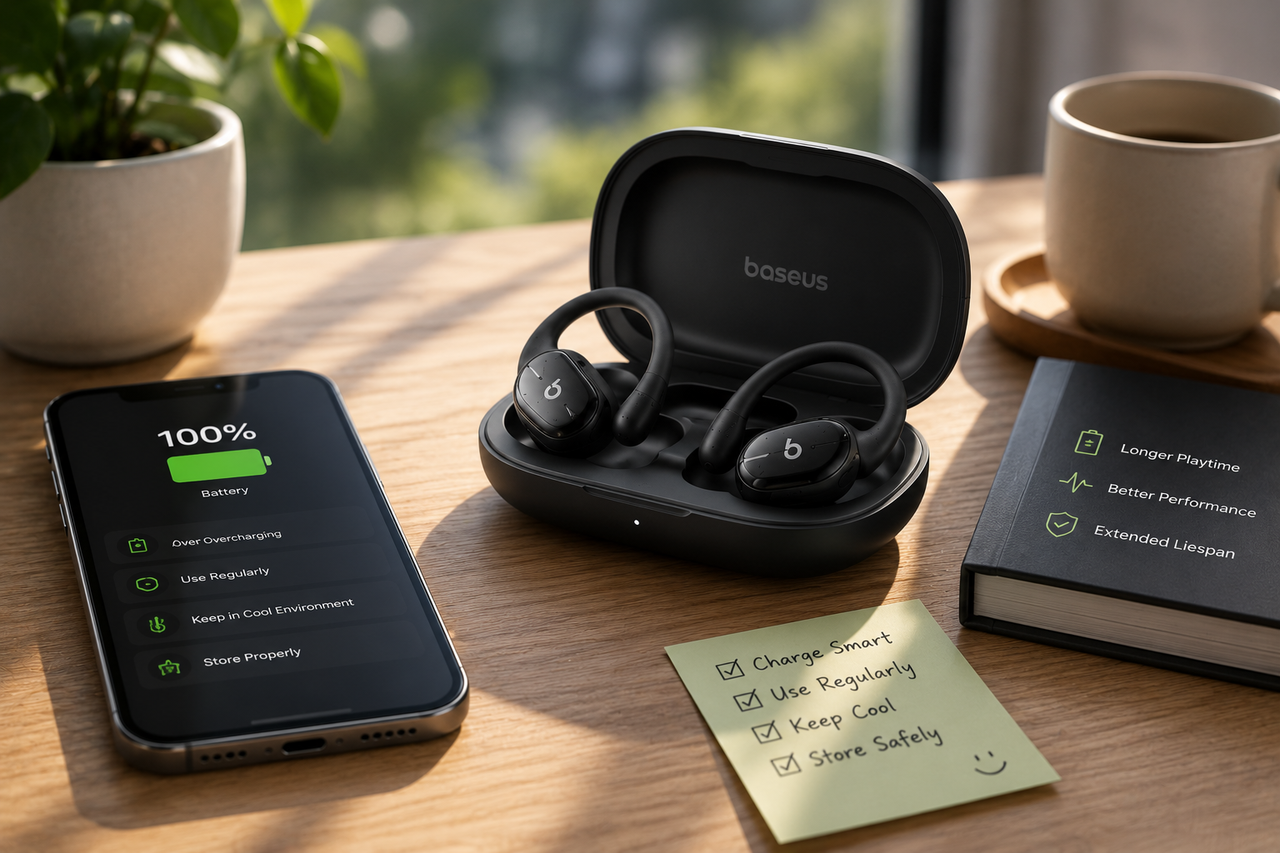
The Baseus MC2 Open-Ear Earbuds use CloudComfort 2.0, detachable cushions, Grammy-winner recommended audio technology, and boast a massive 55-hour battery life. However, today, the main attraction is its IP67 waterproof rating, which allows the earbuds to fit seamlessly into your life and handle dust, sweat, rain, and water splashes with ease.
More than anything, the MC2 earbuds were built to redefine comfort and convenience, giving you all the sound quality, superior comfort, and agility you’d need, while still keeping your earbuds protected from the elements.
Conclusion
In a world where wearable technology has taken over, it’s important to fully understand the specs and features thrown your way. With open-ear earbuds, it’s easy to see the open structure and doubt their durability on a rainy day. However, we’ve evolved our designs to keep up with dynamic lifestyles in a modern landscape. Today, you can enjoy working up a sweat, getting caught in the rain, or any of your day-to-day activities without worrying about the next splash ruining your day.
FAQ
Q1: What are IP ratings?
A set of standards used to grade the resistance of an enclosure against the intrusion of dust or liquids. In tech, this rating tells you the water and dust resistance of a device.
Q2: Can I wear open-ear earbuds in the rain?
Mostly, yes. Most open-ear earbuds feature an IPX4 rating or higher and can handle light rain and sweat. However, heavier rainfall may require an IPX5, IPX6, or higher rating for reliable protection.
Q3: What is the difference between water-resistant and waterproof earbuds?
Water-resistant earbuds can withstand limited exposure to moisture, such as sweat or light rain, while waterproof earbuds are designed to survive greater levels of water exposure. The distinction is usually determined by the device's IP rating.
Q4: Does waterproofing affect sound quality?
Not negatively. Waterproofing often helps maintain long-term sound quality by protecting sensitive internal components from moisture-related damage.
Q5: Can sweat damage open-ear earbuds?
Yes. Sweat contains salts and minerals that may corrode internal components over time without the proper water resistance. Choosing open-ear earbuds with at least an IPX4 rating can help prevent damage.